
The Africa Cup of Nations (AFCON) is one of the most exciting football tournaments in the world, bringing together the best national teams from across the African continent. Every edition delivers unforgettable moments, dramatic upsets, and world-class performances. At the center of all the anticipation are the AFCON fixtures—the official match schedule that determines who plays whom, when, and where.
For fans, analysts, players, and broadcasters alike, AFCON fixtures are more than just dates on a calendar. They shape team strategies, travel plans, fan engagement, and even the outcome of the tournament itself. In this article, we’ll take a deep dive into AFCON fixtures, how they are structured, why they matter, and how fans can stay updated.
What Are AFCON Fixtures?
AFCON fixtures refer to the complete list of scheduled matches in the Africa Cup of Nations tournament. These fixtures include:
- Group stage matches
- Round of 16 games
- Quarterfinals
- Semifinals
- Third-place playoff (in some editions)
- The final match
Each fixture specifies the competing teams, match date, kickoff time, and venue. Once released by the Confederation of African Football (CAF), the fixtures become the official roadmap of the tournament
How AFCON Fixtures Are Organized
Group Stage Fixtures
The tournament typically begins with a group stage, where qualified teams are divided into groups (usually six groups of four teams). AFCON fixtures in this stage follow a round-robin format, meaning each team plays every other team in its group once.
These fixtures are carefully planned to ensure:
- Fair rest periods between matches
- Balanced kickoff times
- Efficient use of stadiums
Group stage AFCON fixtures are crucial because they determine which teams advance to the knockout rounds.
Knockout Stage Fixtures
After the group stage, the competition moves into the knockout phase. AFCON fixtures at this stage are more intense because every match can mean elimination. If a game ends in a draw, extra time and penalties are used to determine the winner.
The knockout fixtures usually follow this order:
- Round of 16
- Quarterfinals
- Semifinals
- Final
These fixtures are often scheduled with longer rest periods to allow teams to recover physically and tactically.
Why AFCON Fixtures Matter So Much
For Teams and Coaches
AFCON fixtures play a massive role in team preparation. Coaches analyze the schedule to:
- Plan training sessions
- Rotate players
- Prepare tactics based on opponents and recovery time
A tough run of fixtures with minimal rest can significantly affect a team’s chances of success.
For Fans
Fans rely on AFCON fixtures to plan how they watch the tournament. Whether attending matches in stadiums or watching from home, knowing the fixtures helps supporters:
- Follow their national team
- Organize watch parties
- Travel to host cities
The release of AFCON fixtures often sparks excitement and debate across social media.
For Media and Broadcasters
Broadcasters and journalists depend on AFCON fixtures to schedule coverage, build storylines, and prepare analysis. High-profile fixtures—such as matches between traditional rivals—often receive prime broadcast slots.
Key Matches to Watch in AFCON Fixtures
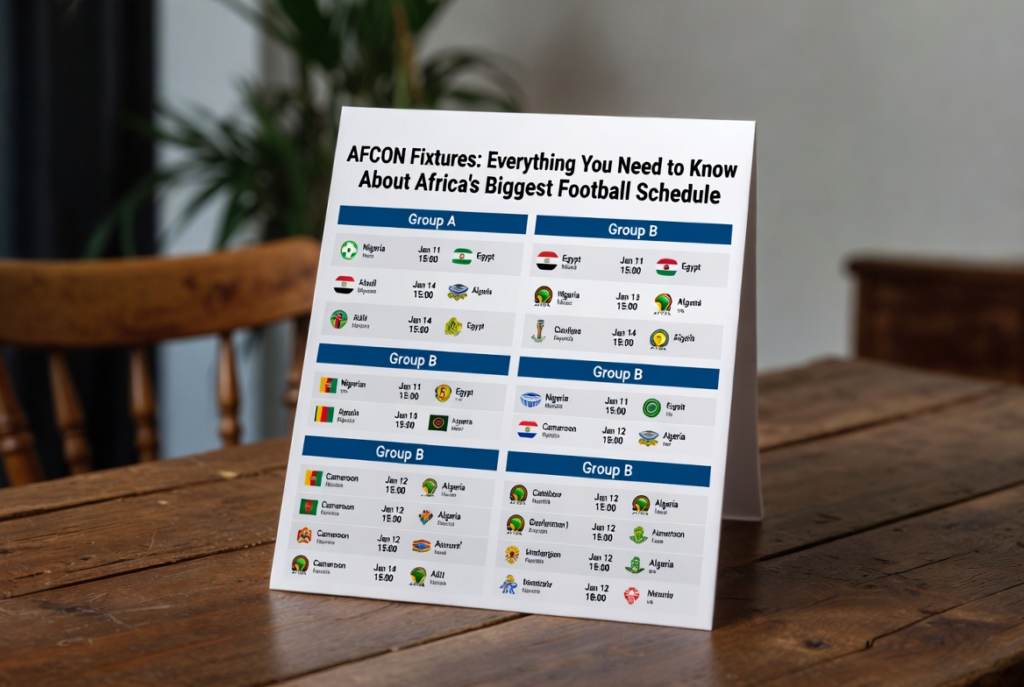
Every AFCON edition features standout fixtures that capture global attention. These often include:
- Matches between former champions
- Regional rivalries
- Host nation games
- Final group matches that decide qualification
While exact matchups change with each tournament, fans always scan the AFCON fixtures to identify potential “blockbuster” clashes early on.
AFCON Fixtures and Host Venues
AFCON fixtures are closely tied to the host nation’s stadiums and cities. CAF works with the local organizing committee to ensure that fixtures are distributed fairly across venues. This approach helps:
- Showcase different regions of the host country
- Reduce travel fatigue for teams
- Maximize fan attendance
Some stadiums may host more high-profile fixtures, including semifinals or the final, depending on capacity and infrastructure.
How AFCON Fixtures Are Announced
CAF usually releases AFCON fixtures after the official draw ceremony. During this event:
- Teams are drawn into groups
- Match order is determined
- Venues and dates are confirmed
Once announced, fixtures are shared across CAF’s official platforms, national football associations, and global sports media outlets.
However, it’s worth noting that AFCON fixtures can sometimes change due to unforeseen circumstances such as weather conditions, logistical challenges, or security concerns. Fans are always advised to check for updates.
How to Stay Updated on AFCON Fixtures
To avoid missing any match, fans can stay updated on AFCON fixtures through several channels:
- Official CAF website and social media pages
- Sports news websites
- Mobile football apps
- Television broadcast schedules
Many apps also offer notifications, ensuring fans are alerted before kickoff.
The Impact of AFCON Fixtures on Club Football
AFCON fixtures don’t just affect national teams—they also have a major impact on club football. Since the tournament often takes place during the European club season, clubs must release players according to FIFA regulations.
As a result:
- Clubs plan around AFCON fixtures
- Squad depth becomes crucial
- Some leagues experience temporary disruptions
This dynamic adds another layer of importance to the timing and structure of AFCON fixtures.
Conclusion
AFCON fixtures are the backbone of Africa’s premier football tournament. They shape the competition, influence team performance, and fuel the passion of millions of fans across the continent and beyond. From the opening match to the final whistle, every fixture tells part of the AFCON story.
Whether you’re a lifelong supporter or a casual viewer, understanding AFCON fixtures enhances your appreciation of the tournament. As each new edition approaches, the release of the fixtures signals one thing loud and clear: African football’s biggest celebration is about to begin.