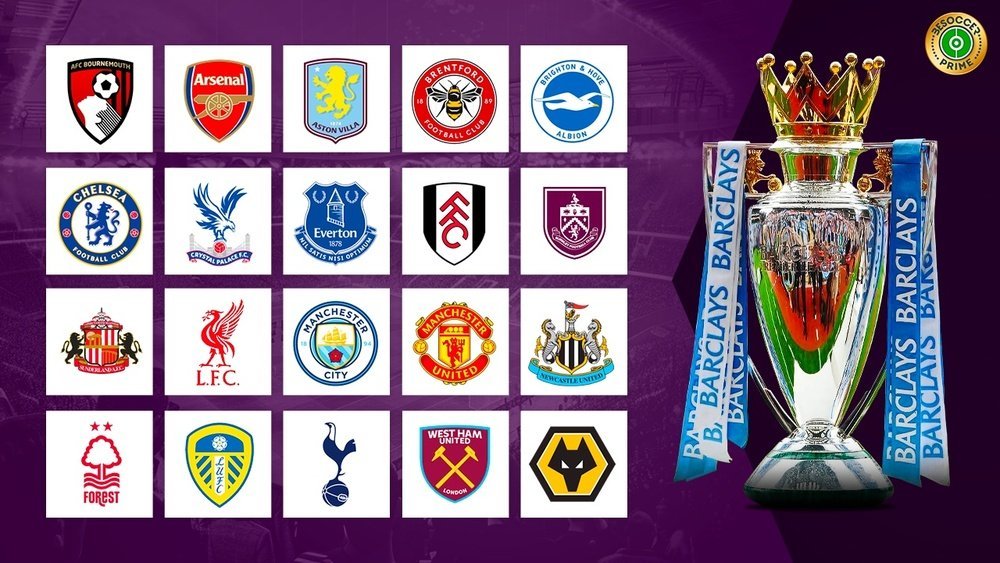
Premier League coupons for 2024/25 are full of “good prices” on paper, but from a bettor’s perspective the key question is whether those odds are actually misaligned with reality. Real value only appears when your evidence‑based view of a match or market differs from what the numbers on screen imply, and you have the discipline to act on that gap consistently rather than chasing individual wins.
What “value” really means in a Premier League price
Value betting is about mathematics, not gut feeling: a price is good only if the odds understate the true chance of an outcome. When a team trades at odds that imply a 40 percent chance but your model or reasoning supports a 50 percent chance, the bet has positive expected value even though it will still lose often. Experienced bettors judge their decisions by whether they repeatedly take these edges, not by whether the next single result happens to land their way.
Converting 2024/25 odds into implied probabilities
To know whether a Premier League price is fair, you first need to translate odds into implied probability. Decimal odds can be inverted with a simple formula—implied probability equals 1 divided by the decimal price—showing how often the market “believes” the result should occur. Once you see a title favourite at 2.10 or a relegation candidate at 3.00 for a specific outcome, you can express those numbers as percentages and compare them with your own estimates rather than reacting to labels like “short” or “big”.
How expected value ties those probabilities back to your bankroll
After you have a probability estimate, you can calculate expected value to see if a bet is theoretically profitable. A standard EV formula multiplies your win probability by profit if you win and subtracts loss probability times stake; if the number is greater than zero, you have a positive‑EV position. In practice, that means a 30 percent edge at high odds can be more valuable than a slight edge on a heavy favourite, but only if you size stakes so that inevitable downswings do not wreck your bankroll.
Where 2024/25 Premier League markets usually price efficiently
Top‑flight football is one of the most analysed betting environments, and odds on headline markets—outright winner, top four, match result—tend to be tight. Early‑season winner prices strongly favour Manchester City and Arsenal at short odds, with Liverpool and the rest extending out in a way that broadly reflects predictive models and public expectations. Because huge volumes of money and sophisticated models converge on these numbers, experienced bettors often find it difficult to uncover large mispricings in the main Premier League markets without extremely sharp information.
Over time, data on profitability by team shows that most clubs trade close to their “true” level in match odds once vig is accounted for, meaning blind strategies—always backing favourites, always laying them, always taking draws—do not outperform the house edge. Where small edges appear, they tend to be fleeting and linked to specific spots such as late injury news, unusual scheduling or rapid tactical changes that models and casual money react to at different speeds. That reality is why seasoned Premier League bettors lean heavily on process and patience instead of expecting easy money from every weekend coupon.
Situations where real bettors actually find mispriced odds
Despite overall efficiency, certain recurring scenarios in 2024/25 create conditions where odds can drift away from fair value. Sharp players often mention overreactions to short‑term form, excessive weight on big‑club reputations and delayed adjustments to tactical or injury‑driven changes in mid‑table and lower‑profile teams. In each case, the cause is the same: public narratives move faster or slower than underlying numbers, giving anyone with a more grounded model a temporary edge.
A classic example is a high‑profile side coming off two televised defeats, pushing its match odds out further than performance metrics justify; another is a quietly improving underdog whose recent underlying stats improve before results and headlines catch up. Experienced bettors in forum discussions stress that value rarely screams from the page—if the price looks absurd to everyone, it usually corrects quickly—so genuine edges tend to be small, repeatable and visible only to those tracking their own fair odds over many weeks.
How experienced bettors mentally categorise “good” and “bad” prices
Long‑term players often think about odds in categories rather than absolutes: clearly mispriced, roughly fair, or too tight to care about. When their own fair odds sit close to the market, they pass, even if the bet feels attractive as a fan; when a sustainable model consistently outputs shorter prices than the book on a given angle, they treat that as a green light to stake modestly. The discipline lies in ignoring “nearly value” positions and saving firepower for situations where the gap between fair and offered prices is meaningful relative to risk.
Illustrative view of price “zones” for a bettor’s fair odds
| Market type | Market odds | Bettor’s fair odds | Interpreted value judgment |
| Match winner favourite | 1.80 | 1.75 | Effectively fair; edge too thin after margin. |
| Match winner underdog | 4.50 | 3.80 | Positive EV; small overlay worth consideration. |
| Top‑four finish | 3.00 | 2.40 | Strong value; good candidate for planned stake. |
| Relegation market | 6.00 | 6.20 | Slightly negative EV; no incentive to get involved. |
This kind of table is not a spreadsheet trick; it is a mental framework that stops you conflating “interesting story” with “edge.” A team can be in great form or have a compelling narrative but still sit in the “fair” or even “bad” zone if the market has already adjusted, while an unglamorous mid‑table club may quietly live in the positive‑EV area because its improvement has gone under the radar. Seasoned bettors report that once they adopt this mindset, they place fewer bets but feel far more confident in the ones they do take.
Using a sports betting service without letting the interface hijack your value logic
Even a solid view of fair odds is easy to lose under the pressure of live offers, boosts and accumulator prompts. When you operate through a sports betting service such as ufabet, the layout, highlighted parlays and flash promotions often emphasise entertainment and high‑variance combinations rather than carefully selected single edges. To keep your focus on value, experienced bettors often pre‑commit to a narrow set of markets they know how to price, limit the number of simultaneous bets on the same match, and record the fair odds they assigned before seeing any “enhanced” prices so they can later check whether those enhancements genuinely improved expected value or simply added complexity and risk to their portfolio.
Why value thinking in sports should not be copied into casino online play
The value‑betting mindset in Premier League markets relies on the assumption that your estimate of true probability can sometimes beat the bookmaker’s model. In a casino online context, by contrast, game rules and house edges are fixed, and there is no accessible stream of form, injuries or tactical data that lets you rationally adjust the odds in your favour. Attempting to apply the same “edge hunting” mentality to roulette or slots usually means misreading random streaks as signals, which long‑term studies of online gambling consistently show leads to losses that reflect the built‑in disadvantage rather than player skill.
Summary
From a real bettor’s standpoint, evaluating 2024/25 Premier League odds is mostly about turning prices into implied probabilities and comparing them with a disciplined, evidence‑based view of each market. League‑wide efficiency means true edges are small and situational, appearing where narratives, form and data fall out of sync rather than in every match on the coupon. By quantifying value through expected‑value formulas, categorising prices into clear zones and resisting interface‑driven impulses in both sports and unrelated casino products, you give yourself a realistic chance of turning experience into a long‑term edge rather than a sequence of isolated wins and losses.